
How Not To Be a Boy by Robert Webb
Book of the Week: 20 May 2018
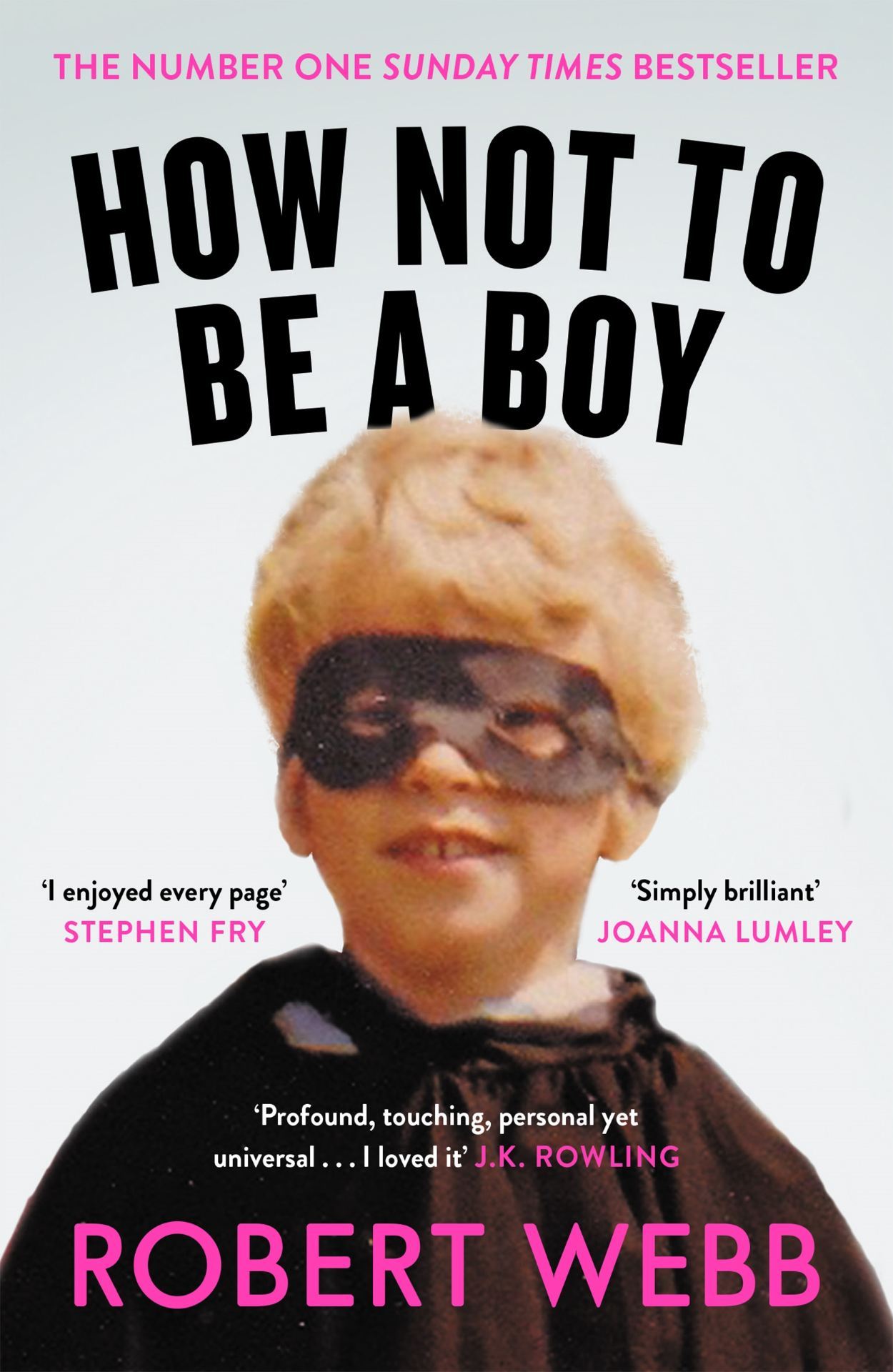
Cover design by Peter Adlington
If you are revising for GCSEs or A-Levels, reading has been shown by one study to be 68% better at reducing stress levels than listening to music and 700% better than playing video games (1), so why not try Book of the Week in the shape of How Not To Be a Boy?
You don’t need to know who Robert Webb is to enjoy this book, as this is far from being a typical celebrity memoir. There is a touch of the Adrian Moles at the start of the book where he describes situations such as trying to avoid contact with the ball in football matches, or playing with his gang of twelve imaginary friends who he calls the ‘Guy-Buys’. Coming from a working-class background in a small Lincolnshire village, Robert didn’t have a sense that the world would be his oyster. He sat the eleven-plus without realising it as Mrs Benson, his teacher, regularly handed out tests and didn’t tell her pupils when it was ‘the real thing’. Once in grammar school, where he started acting in sketches, his form tutor, Mrs Slater, noticed his love of such things and encouraged him. When he started wondering how funny people met one another, he came to the conclusion that “a suprising number of them met at one university in particular. Some kind of comedy club called the Cambridge Footlights…. I ask Mrs Slater if it’s ridiculous of me to think of Cambridge. ‘No, not ridiculous,’ she says quickly, and then, ‘We’ve certainly sent dimmer people than you there.” He decides to ‘read everything’ to get good enough results to get there but a family tragedy strikes when he is in sixth form which threatens to derail everything and it looks as if he will have to give up on his dream.
If you know anything about his success as an actor and comedian, you will know that he did manage to hold on to his ambitions, but it is fascinating to find out how he achieved what he did. The strengths of this touching book are the humour and the frequent reflections on traditional expectations of what is appropriate behaviour in boys and how helpful or unhelpful those attitudes might be in life and their effect on mental health.
(1) Chiles, Andy, ‘Reading can help reduce stress, according to University of Sussex research’, The Argus, 30 March 2009 <http://www.theargus.co.uk/news/4245076.Reading_can_help_reduce_stress__according_to_University_of_Sussex_research/> [accessed 20 May 2018]
Recommended for older readers due to occasional strong language, some sexual references and events some younger readers may find upsetting.

