Origins

Quote

Origins: How the Earth Made Us by Lewis Dartnell

Book of the Week: 3 March 2019
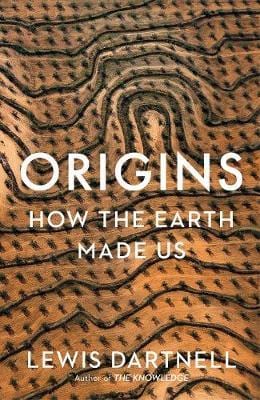
Cover photograph Yann Arthus-Bertrand/Getty Images

So many of you have enjoyed Sapiens by Noah Yuval Harari that when Origins was compared to it by reviewers, I bought it immediately. I have managed to find a geography graduate who has read it and here are his comments:

The Pale Blue Dot is a photograph of Earth taken by Voyager 1 in 1990 when it was 6 billion kilometres from Earth. Carl Sagan wrote ‘Look again at that dot. That’s here. That’s home. That’s us. On it everyone you love, everyone you know, everyone you ever heard of, every human being who ever was, lived out their lives.’ But how did it get that way? Why did we humans develop that way and, in just 10,000 years, go from the Stone Age to having wheeled-rovers exploring Mars?

When we look back at our history we tend to think of leaders, great wars, political tensions, disputes over territories or borders but fail to realise that the Earth itself has determined our destiny. The continuing movement of the Earth’s tectonic plates has changed the very shape of our planet from one single continental mass to the globe we recognise now. Mountain ranges have been thrust up, causing fundamental changes in weather patterns and sea currents; ice ages have been a regular feature throughout millennia with massive changes in sea-levels occurring as water gets locked up in ice and then released in a thaw. Civilisations were able to grow and develop because they were fortunate enough to have suitable weather, animals capable of domestication and types of grass that were selectively bred for cereal crops, as a result of millions of years of geographic meandering of land masses and volcanic underground turmoil. 

Origins outlines the many factors that had to happen, in sequence, to make our Earth as it is and for humans to become the most developed creature that has so far lived. The probability of life is astonishingly small and this book shows the path from a world with no oxygen and one giant land mass, to the place we recognise. The ‘entire history of civilisation is just a flash in the current interglacial period.’ In 50000 years the next ice age is predicted to begin. Earth made us. 

If you enjoy this, you might like Lewis Dartnell’s The Knowledge, or, if you like books that cover ‘big topics’, you may like The Silk Roads by Peter Frankopan or Noah Yuval Harari’s books. These are all in stock in the Tim Pigott-Smith Library.

Prisoners of Geography

Prisoners of Geography by Tim Marshall

Book of the Week: 8 January 2017

Prisoners of geography is nothing to do with Mr Dunford keeping the class behind at the end of Period 3, and everything to do with how ignoring geography can have profound implications for economies and create tensions that lead to wars.

Tim Marshall asks, and answers, questions such as ‘Why can’t the USA be invaded?’ (It is to do with the lack of landmasses to the west and east that would support an invading army, as well as the Canadian shield to the north added to the problem of needing a long supply-chain if an army invaded via Mexico in the south) Other questions include: ‘Why would Russia fear Poland?’, ‘Do you know how far it is from the USA to Russia at the nearest point and why does that matter?’ (It’s about 3.4 km.), ‘What is different about the coastline of Greece and South America that had fundamentally affected the way their economies have developed?’ and ‘How did the French and British map makers of the early 20th century unwittingly contribute to the current political tensions in the Middle East?’

This book brings into sharp focus many of the current political and ethnic tensions faced across the globe demonstrating the vital importance of geographical knowledge.

Map Addict

Quote

Map Addict by Mike Parker
Book of the Week: 12 July 2015
Map Addict

Geography students, those returning from Duke of Edinburgh expeditions whose maps might have got a bit soggy during the last week, and anyone who is planning a trip this summer – try Map Addict by Mike Parker. The final book choice of the academic year is non-fiction and the publisher’s description says:

Have you ever got through an entire day without referring to some kind of navigational aide, be it checking the A-Z, touring the globe on Google Earth, planning a walk or navigating a shopping centre? Maps are everywhere and they are, according to self proclaimed map-addict Mike Parker, the unsung heroes of life. Here he sings their song, celebrating everything cartographic.

With a mix of wry observation and hard fact, the offbeat and the completely pedantic, Parker wages a one-man war against the moronic blandishments of the Sat Nav age. He combines cartographic history and trivia with memoir and oblique observation to create a highly readable exposé of the world of maps. Only here can you find out which area has officially been named by the OS as the most boring square kilometre in the land and whether Milton Keynes was really built to pagan alignment.

Confessing that his own impressive map collection was founded on a virulent teenage shoplifting habit Parker ponders how a good leftie can be so gung-ho about British cartographic imperialism and establishes himself as defender and saviour of British cartography in the internet age.

I would have written my own review but couldn’t persuade my husband, a geography graduate, to put it down long enough.

Summer reading

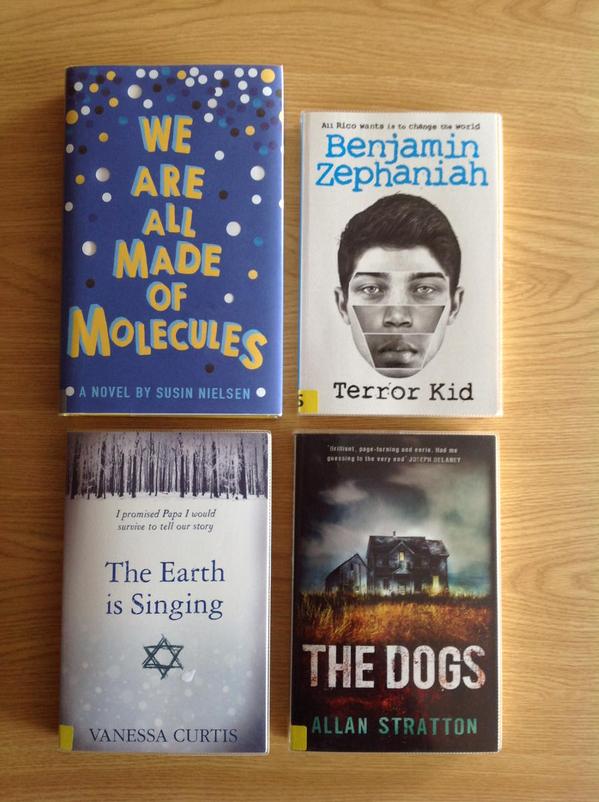
Those on the judging team for November’s Warwickshire Year 9 Book Award will be reading some or all of these shortlisted books. I have read We Are All Made of Molecules which reminded me slightly of Wonder by R.J. Palacio and The Dogs by Allan Stratton which was wonderfully creepy. I am looking forward to the other two.

CHSZvBaWgAAXfWHA few books have been published just a little too late to be added to stock now, but look out for them next term or borrow them from your local public library.

There is a lot of media coverage of Harper Lee’s Go Set a Watchman which is to be published on July 14th. It is a long-lost companion volume to To Kill a Mockingbird.

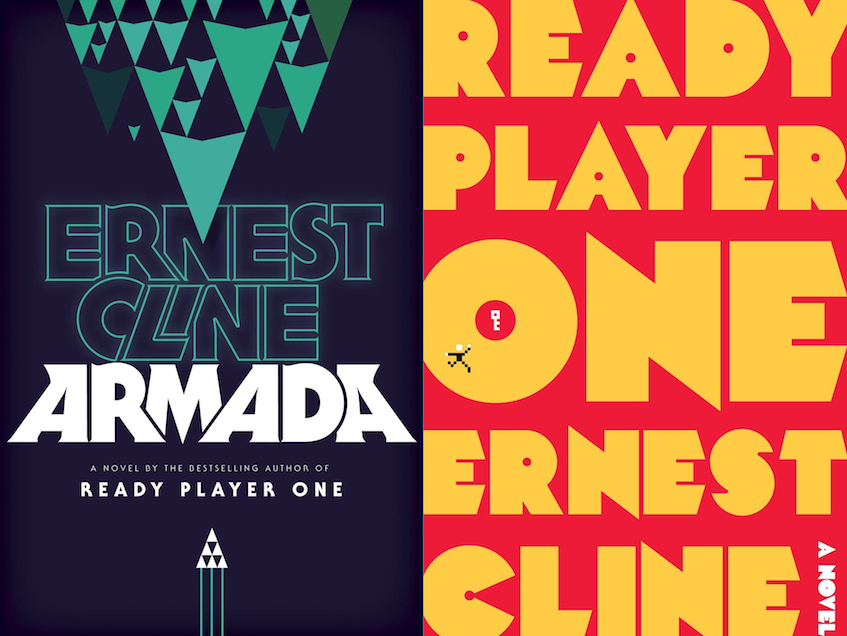
On July 16th Ernest Cline brings out Armada which sounds slightly similar in plot to Ready Player One and Joe Abercrombie completes his Shattered Sea trilogy with Half a War.Cline_Covers

For younger readers, the mighty Patrick Ness has The Rest of Us Just Live Here due on August 27, a story about not being a hero with superpowers.Rest of Us

September promises a new Derek Landy that has nothing to do with Skulduggery Pleasant. Demon Road is the first in a trilogy and has vampires, killer cars and demons. Then there is another installment of the Lorien Legacies with The Fate of Ten plus the third in the Paladin Prophecy series by Mark Frost, entitled Rogue. Lots to look forward to.

Happy reading!

Mrs Watts