Hey Sherlock!

Hey Sherlock! by Simon Mason

Book of the Week: 30 March 2025

Cover design by Alice Todd

Description of Garvie Smith from the beginning of the book:

  1. Lazy, rude, golden-hearted, aggravating, economical with the truth, kind (to those who deserve it).
  2. Highest IQ ever recorded at Marsh Academy.
  3. Lowest grades.
  4. Best mates with Felix (cat burglar), Smudge (stupidest boy at school and proud of it), Alex (who’s been selling something he shouldn’t).
  5. Wouldn’t dream of telling his mother he loves her. Besides, she wants to move back to Barbados, and what’s the point of that?
  6. Smokes, mainly tobacco.
  7. Liked by girls.
  8. Hated by the police, teachers, other boring adults.
  9. Exceptionally good at maths.
  10. Scared of dogs.

Garvie is certainly less than perfect, but has the ability to spot details that others miss. Rather like Sherlock Holmes, he has a well-meaning but less clever sidekick in the figure of Smudge, a contact in the police force whom he distains and a laconic and abrupt manner (he admits he is not good with people). However, Garvie and his investigations are more like the hard-boiled adult detective stories of authors like Raymond Chandler and Dashiell Hammett.

The story starts with the mysterious disappearence of Amy Roecastle, a teeenage rebel who comes home late one night to face her angry mother who has stayed up to remind her that she promised to be home by ten o’clock and it is now past midnight. Her mother leaves the room and when she returns, Amy has vanished. A storm is raging outside and Amy has disappeared into the woods where a van has been parked. Garvie happens to be working on the Roecastle premises, as he is now 16 and has left  school to work for Smudge’s brother’s garden fencing company. When Inspector Singh comes to investigate, Garvie finds himself drawn into the case.

I’m late to reading this series (this was published in 2019) and I’m reading them in the wrong order (this is book three in the series), but would recommend this as a good who-done-it with a fascinating central character and a plot that doesn’t go where you expect it to.

Suitable for older readers.

Good Girl Bad Blood (Book of the Week: Lockdown edition)

Good Girl, Bad Blood by Holly Jackson

Book of the Week: 17 May 2020

Cover designer not credited

I am giving my bookshelves from the 1980s a rest this week because I have a brand new book: the follow-up to A Good Girl’s Guide to Murder which was Book of the Week in June 2019

We are back in Little Kilton with Pip and Ravi barely having recovered from the Andie Bell case. Pip has been working on a podcast to document the investigation and Ravi jokingly suggests she call it ‘Little Kill Town’. It’s not a bad idea, as the town is on the way to being as much a centre of crime as Inspector Morse’s Oxford. Pip, however, is realising that investigating crime is taking its toll and she just wants to concentrate on schoolwork and her podcast. Her mind is changed when her friend Connor comes to beg her to look into the disappearance of his older brother Jamie. The police are unwilling to investigate because Jamie is an adult and there is no indication of foul play. Connor and his mum feel very differently and say he had been behaving strangely for some time before he abruptly vanished. Thankfully for the reader, Pip decides to help her friend and we are back to uncovering the secrets of school friends and residents and trying to see if we can guess who secretly hates who and what people are desperately trying to hide.

Although you do not have to have read the first book to enjoy this one, it does add an extra dimension to be familiar with some of the characters and understand the aftermath of the events in the first book. This one is just as tense and carefully plotted, has well-placed use of social media and fans will not be disappointed.

There is a ‘mature content’ notice on the back of the book and a small amount of strong language, and description of crimes, that make it generally more suitable for older readers.

Catching Teller Crow

Catching Teller Crow by Ambelin and Ezekiel Kwaymullina

Book of the Week: 22 September 2019

Photography by Shutterstock

A short and powerful read by brother and sister writers, Ambelin and Ezekiel Kwaymullina, set in a small Australian town. Grieving detective Michael Teller is attempting to get to the bottom of a series of murders and a fire in a children’s home that may have been started deliberately. He is being watched over by the ghost of his dead daughter, Beth, who was killed in a road accident. Only he can see and communicate with her. When they visit a hospital to interview a potential witness, a girl called Isobel Catching, they hear a strange and confusing story that may be a fantasy or may tell them something important about the dreadful events that have taken place.

Beth narrates most of the story in prose, whilst Isobel’s experiences are in free verse. This mix of styles and interweaving of  a tense, real-life crime mystery with dream-like sequences, makes for a compelling and unusual book.

D.O.G.S.

D.O.G.S. by M.A. Bennett

Book of the Week: 8 September 2019

Cover design by Alexandra Allden

I nearly didn’t pick this because the central character, Greer, doesn’t like the work of our most famous Old Edwardian. However, S.T.A.G.S. won the Warwickshire Book Award back in March and this sequel is just as gripping.

We are back in the priviledged environment of St Aidan the Great School just where S.T.A.G.S. left off, partly because Greer strongly disapproves of sequels that start three years later than the original. She, Nel and Shafeen are now starting their final year at school and although Greer is still brooding over the death of Henry de Warlencourt, she is looking forward to a new school year. As part of her A-level Drama course she has to stage a play written before 1660 and has already ruled out Shakespeare. One evening, a sheaf of yellowing pages is pushed under the door of her room; these appear to be the beginnings of a play called The Isle of Dogs by Ben Jonson. When she takes the papers to her Drama teacher, Abbott Ridley, he is stunned. The play, written in 1597, was performed but then suppressed, meaning all copies were burned and the theatres closed. What could it have contained to make it so dangerous? When the next set of pages appear under Greer’s door, the Abbott suggests she stage the play for her A-level course. But who is feeding her pages, are they genuine and who is sending her cryptic messages about the recent past on Instagram?

Expect plenty of mystery and tension in a plot that skilfully mixes an ancient puzzle, and fascinating details about Elizabethan theatre and politics, with the elements that made S.T.A.G.S. such an enjoyable thriller.

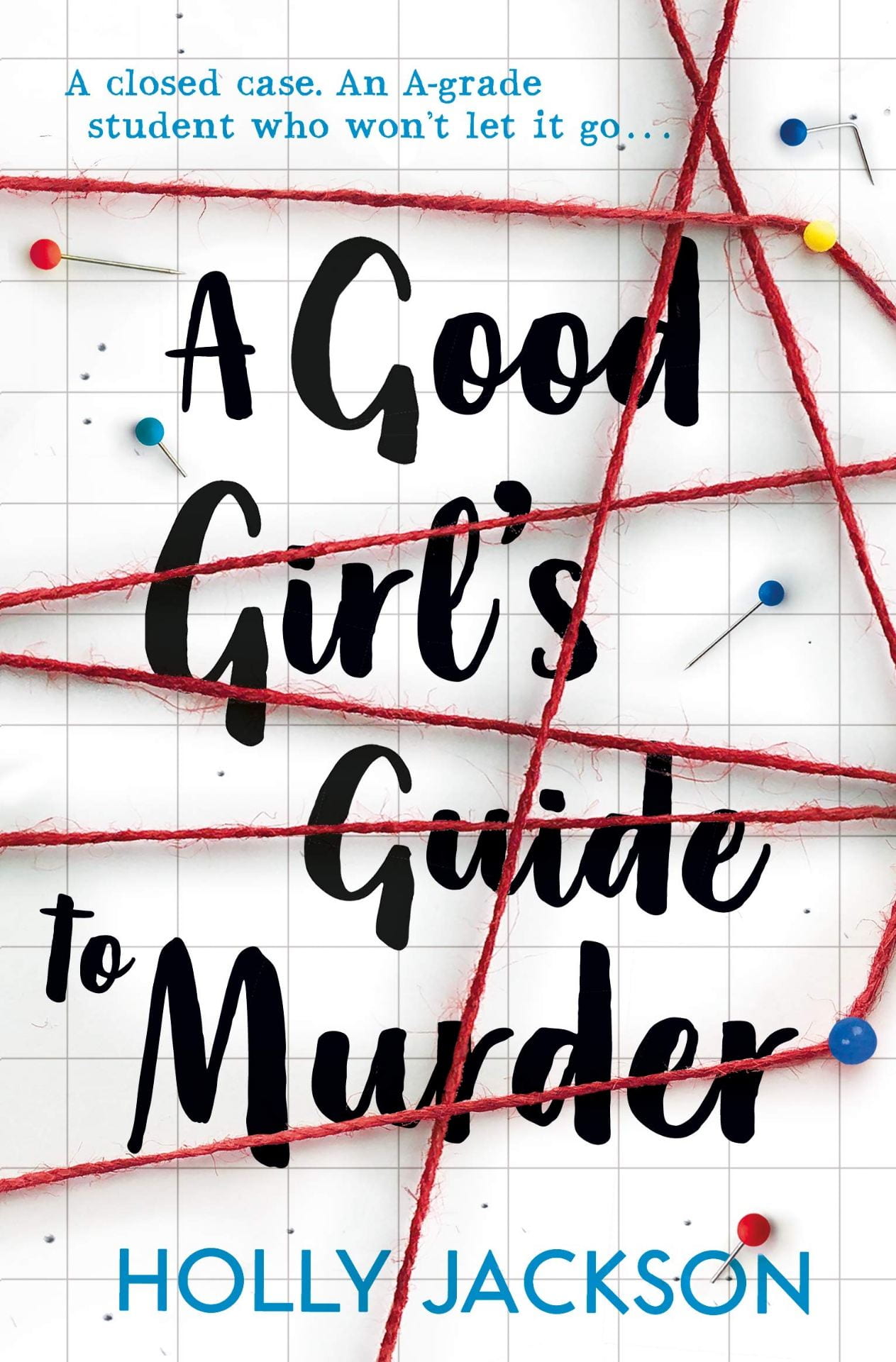
A Good Girl’s Guide to Murder

A Good Girl’s Guide to Murder by Holly Jackson

Cover design not credited

Pippa Fitz-Amobi decides to do her EPQ (Extended Project Qualification) on the 2012 investigation into the disappearance of schoolgirl Andie Bell in her home town of Little Kilton. The media and the local residents know who killed Andie, although her body has never been found. Her boyfriend, Sal Singh, caused his own death by suicide shortly afterwards and the evidence against him seemed overwhelming. Since then, his parents and younger brother Ravi have been gossiped about and ostracised. Pip starts by visiting the Singh family and telling Ravi that she doesn’t think that Sal murdered Andie and, what’s more, she is going to prove it.

There follows entries in Pip’s production log of telephone calls, Facebook snooping and interviews with Andie and Sal’s friends and a local journalist. The more Pip uncovers, the more complex the case for Sal’s innocence seems to be. But if he didn’t commit the crime, who did? And what actually happened to Andie Bell?

The dark and twisty story is plotted in great detail and keeps the reader guessing throughout. If you enjoyed One of Us is Lying, this is a must-read.

The mature content and occasional strong language make it more suited to older readers.

As someone who regularly teaches referencing, I had to agree with Pip’s note to herself: ‘Write your references in now so you don’t have to do it later!!!’ (Jackson, 2019, p.8).

References

Jackson, H. (2019) A good girl’s guide to murder. London: Egmont.

High-Rise Mystery

High-Rise Mystery by Sharna Jackson

Book of the Week: 5 May 2019

Cover art by Wumi Olaosebikan

Nik and Norva live on The Tri estate with their Pap who is the Head Caretaker (‘Single dad, sadly. Dances so, so badly’). It is a baking hot summer when resident Hugo Knightley-Webb fails to turn up for Art Club, prompting Nik and Norva to use their detective skills to try and find him. Nik describes their partnership like this: ‘Norva shouts theories and says seemingly stupid stuff. I then organise those words, and think about them critically.  This is, according to Norva, teamwork. According to her, she’s the Gut and I’m the Nut.’ When they discover Hugo’s dead body in the refuse area of one of the buildings, they are not only devastated but determined to find out who did it. This is the refreshingly sparky beginning to a new series that should please readers who enjoy a well-worked-out mystery.

If you have enjoyed The London Eye Mystery by Siobhan Dowd, The Guggenheim Mystery by Robin Stevens, Murder in Midwinter by Fleur Hitchcock, or Beetle Boy by M.G. Leonard, then give this a try.

Truly Devious

Truly Devious by Maureen Johnson

Book of the Week: 24 March 2019

Cover art by Leo Nickolls

We start this story at an exclusive boarding school in the mountains of Vermont in the 1930s. One foggy April day, new student Dottie Epstein stumbles upon the entrance to a tunnel in the woods, follows it and finds herself in a domed building on an island in the lake. Shortly later, a stranger enters the dome and Dottie is no more. The fog also seems to have hindered the return to school of the wealthy founder’s wife and daughter. In the ensuing panic, Albert Ellingham, the wealthy philanthropist who built the school, receives a telephone call to say kidnappers are holding his wife and daughter and demanding a ransom.

In the present day, detective fan and new student, Stevie Bell, is arriving at Ellingham Academy for the first time with a vast knowledge of the murder and kidnapping and a determination to solve it all.

Whilst this has all the expected ingredients of a murder mystery: grand country house (converted into a school), isolated setting, unsettling atmosphere, a cast of idiosyncratic characters who may or may not be trustworthy and a determined investigator, it also looks at school life and the difficulties of fitting in and does not neatly tie up loose ends because the author wants to hold you in suspense for much longer than the duration of the book. It is only the first in a trilogy.

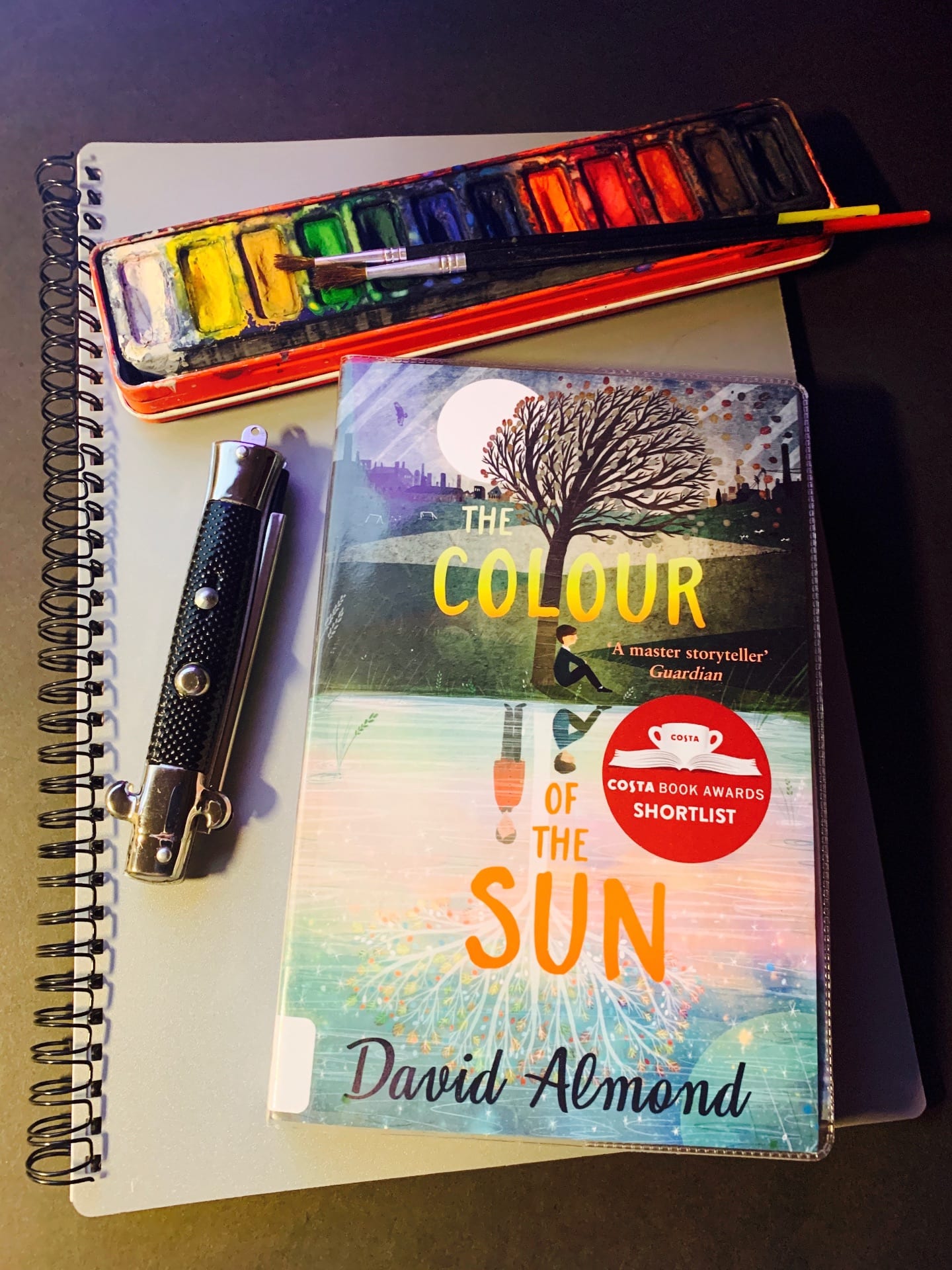
The Colour of the Sun

The Colour of the Sun by David Almond
Book of the Week: 10 February 2019

Cover illustration by David Litchfield

Davie sets out to wander around his unnamed town in the north of England one bright, sunlit morning. He takes a sketchbook and some bits and pieces in an old rucksack and goes ‘for a wander’ as he calls it. Within a short time, he meets a friend who tells him there has been a murder – a young man called Jimmy Killen is lying dead. Davie thinks the most obvious suspect will be Zorro Craig, because all the Killens hate the Craigs and vice versa. For the rest of the day, Davie journeys through town and the hills beyond to look for Zorro and find out the truth. On the way he meets many different characters and observes the beauties of the natural world.

This is a rich piece of storytelling which captures the feeling of being a part of the natural world. There are vivid descriptions of small details, such as bees taking nectar from gorse flowers and the brilliance of wine gums. It is a book that revels in language and the sheer joy of being alive.

What I Couldn’t Tell You

What I Couldn’t Tell You by Faye Bird

Book of the Week: 14 October 2018

Images from Shutterstock

Joe has taken the unauthorised loan of a motorbike from the garage where he works to take his girlfriend Laura to the river, but his plan to be alone with her is ruined when three menacing boys appear, take the bike from Joe and threaten Laura.

The scene then shifts to eight weeks later by which time Laura is in a coma and her family are preparing for their daily visit. Joe is missing and is number one on the list of people the police would like to interview. Laura’s brother Jake and younger sister Tessie have just returned to school after the trauma of Laura’s attack, but school is not a happy place for Tessie. She is selectively mute and is being bullied by two girls about her inability to talk. Tessie can talk at home, or at her friend Max’s house, when the doors are ‘proper shut’, but not in school or other places or when there are strangers about. She cannot even talk to the unconscious Laura in hospital, much as she wants to.

The tension of the first chapter does not let up as we follow Tessie’s attempts to uncover what happened to her sister and navigate complicated family relationships as well as a developing romance with the mysterious Billy.

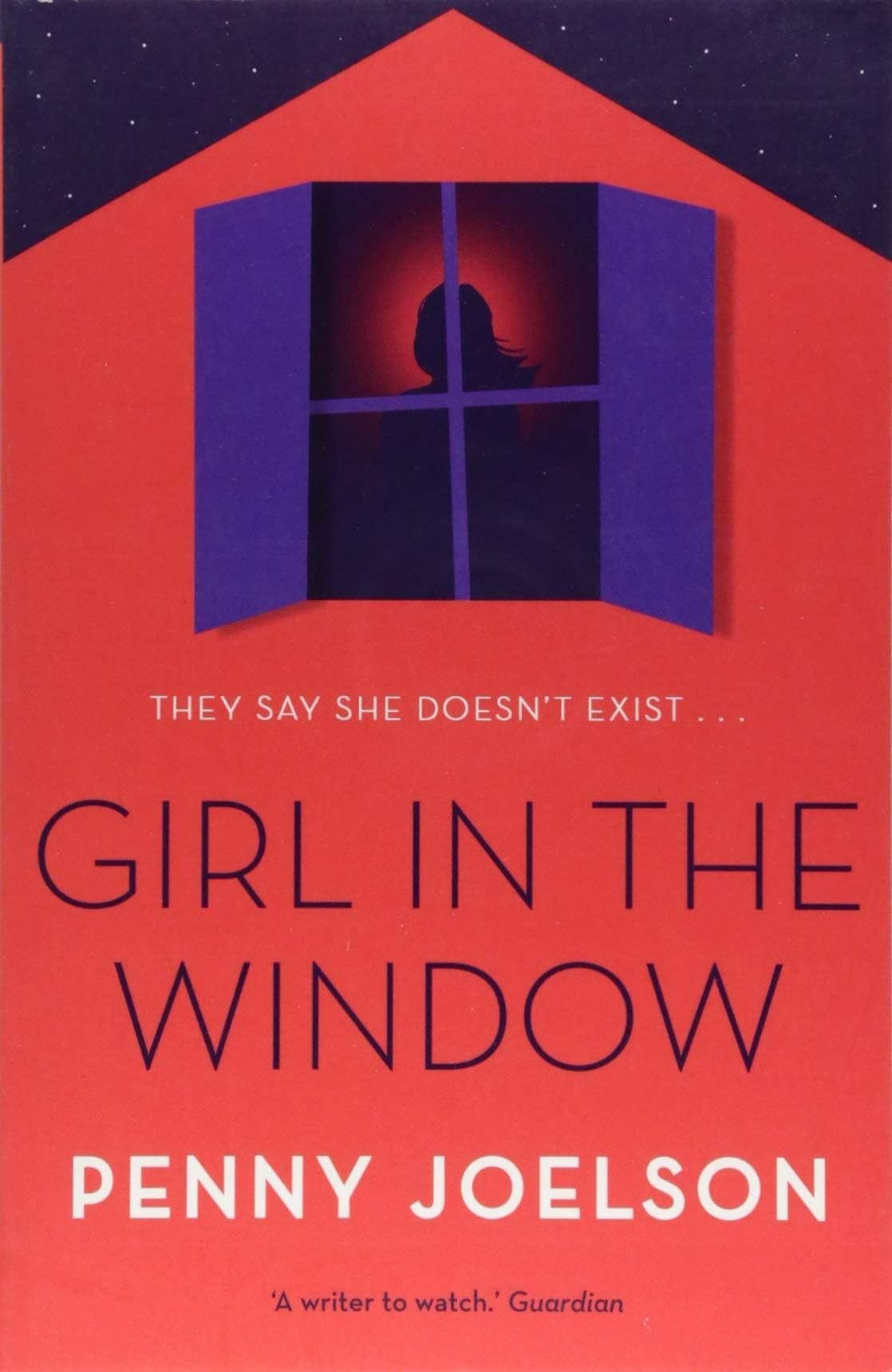
Girl in the Window

Girl in the Window by Penny Joelson

Book of the Week: 23 September 2018

Cover design by Lisa Horton

Confined to the house, and often to her room, Kasia has Chronic Fatigue Syndrome or ME. She is unable to go to school and Ellie is the only one of her friends who still visits her. Her older brother has left home to work in Poland and she is often bored and lonely as well as poorly. One evening, she sees a man jump out of a car and pull a young woman into the back seat. Seconds later, she notices movement in an upstairs window of the house across the street and thinks that someone else must have seen the event too. Kasia rings the police to tell them about the incident and the other possible witness, but when the neighbours are questioned they say there is no girl living there. But then Kasia sees her again.

Although this is the central mystery of the story, there is a lot more to this book than solving the puzzle of the enigmatic girl in the window. We are given a detailed picture of what it is like to struggle with a debilitating condition and the isolation that goes with it and what Kasia lacks in terms of a wider life, she makes up for in terms of an inner life, being curious, thoughtful and determined.

You will enjoy this if you read Penny Jolson’s previous book I Have No Secrets. If you enjoy stories where someone observes from their bedroom window and has to solve a mystery, you could try The Goldfish Boy too.