The Blue Book of Nebo and The Blackthorn Branch

The Blue Book of Nebo by Manon Steffan Ros and The Blackthorn Branch by Elen Caldecott

Books of the Week: 26 February 2003

Cover design by Becca Moor

Cover illustration by Rachael Dean

It has been a long time since I’ve picked a book of the week, so I decided to read two books from the recently-announced longlist for the Yoto Carnegies. To remind me of my homeland, I chose two stories set in Wales, both of which highlight the importance of stories and reading and the power of the natural world.

The Blackthorn Branch is a middle-grade fantasy and The Blue Book of Nebo is a post-apocalyptic novel aimed at older readers.

The Blue Book of Nebo

Fourteen-year-old Dylan, his baby sister Mona and his mum Rowenna live near the village of Nebo in ‘the middle of nowhere’. From their house they can see the towers of Caernarfon Castle, the sea and the island of Anglesey. One day, when Dylan is six, Rowenna hears a radio announcement at work saying that bombs have been dropped on big American cities. She drives to the nearest large town, where she loads up a hired transit van with supplies and returns home. A couple of days later, the power goes off and the frightening chain of events that Dylan and Rowenna call ‘The End’ changes the world forever. The two decide they will write their experiences in a blue notebook that they scavenge from the local village. Rowenna will write about ‘olden days’ and Dylan about what their lives look like now. They promise not to read one another’s entries.

This ‘blue book’ makes for a brief, powerful and bleak read, but never a hopeless one. Despite the harsh conditions, Dylan and Rowenna find much more of a connection with the natural world. Dylan discovers a gift for growing food and a sensitivity to nature. Rowenna sees human emotions in the environment where a ‘potato field is kind on a warm spring day’ or the house develops a hole in the roof because it is ‘fed up’. They gain strength from books and reading, especially from exploring Welsh literature. Dylan notices that the books he used to read, that took cars and computers and phones for granted, don’t make as much sense as they used to and he turns to reading much older stories, including those in the Bible. This is a thoughtful and reflective read with themes that resonate long after the book has been put down.

A couple of good companion reads to The Blue Book of Nebo would be Z for Zachariah or Island of the Blue Dolphins.

The Blackthorn Branch

In the small village of Penyfro in North Wales, Cassie and her cousin Siân are trying to cast a spell using ‘a mush of leaves and rabbit poo and bottle tops’ stirred in a plastic bucket. Siân is confident it will work, but Cassie isn’t convinced that any spell will be able to transform her grumpy, teenage brother Byron back into someone who was fun to be with, rather than a giant sulker who doesn’t seem to care about her, or their Mam and Dad, any more.

One Saturday, when Byron has stormed off in yet another huff, the two girls follow him up the hill outside the village to the old railway line; a quiet, overgrown place since the decline of local industry. They spy on Byron from behind some bushes as he and three other teenage boys dance around a fire in front of a rusting car wreck. Cassie and Siân don’t recognise the boys and, when a flash of blue light erupts from the tunnel, they are so unnerved that they run back home.

The following morning they learn that Byron didn’t come home that night. When he fails to turn up as the day wears on everyone becomes anxious and afraid and a search is mounted. Cassie and Siân feel that the searchers are looking in the wrong locations. They know there is only one place they must venture in order to find him: the dark and dripping tunnel with its weird blue light where he disappeared.

This fast-moving read is an engaging mix of the magical and the everyday. The fantasy is rooted in Welsh myths and legends involving the type of fairy folk (tylwyth teg) who are given to deception, trickery and malice. In contrast, Cassie and Siân, their parents, their Nain (Welsh for ‘grandmother’) and the community of Penyfro are portrayed with warmth and understanding. Woven throughout are lyrical descriptions of the natural world and some messages about the value of stories and reading and the importance of nature. It all adds up to a charming and satisfying read.

The Blackthorn Branch is suitable for readers in Year groups 3-7, but can be enjoyed by anyone. If you are older than this, and like stories based on mythology and faerie, try the much more frightening ‘The Call’ by Peadar O’Guilin or ‘The Cruel Prince’ by Holly Black.

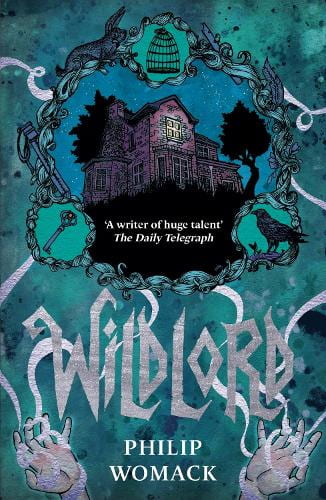
Wildlord

Wildlord by Philip Womack

Book of the Week: 2 January 2022

Cover by Karen Vaughan

Tom is not looking forward to spending a lonely summer holiday at his private school. His distant guardian is busy in Hong Kong and he will be one of only a few pupils drifting around the buildings and grounds of Downshire College. As he is reflecting on the upcoming eight weeks, following a raucous evening celebrating the end of Year 12,  a strange boy hands him a letter from an uncle he didn’t know he had, inviting him to spend the summer at Mundham Farm in Suffolk. After being refused permission to leave school by his tutor, he is walking in the grounds one evening when a tall, thin man with a tattooed face tells him to stay where he is and ‘not wake the past’. The man delivers a slash to Tom’s arm with a blade and disappears. Perversely, this makes Tom determined to discover what is going on, so he skips school and catches the train to Suffolk where he is met at the station by a silent, silver-eyed boy who transports him to Mundham Farm in a horse and cart.

At first, Tom is enthralled by the ancient farmhouse enclosed within a moat and is welcomed warmly by his charismatic Uncle Jack and the thin, pale Zita who speaks like a ‘bright young thing’ from the 1920s. Gradually, however, he realises that all is not what it seems and that an atmosphere of unease and distrust prevails. Why does his uncle tell him to watch Zita and the silver-eyed Kit? Who are ‘The Folk’ who must be kept out at all cost? Why is he assailed by incapacitating pain when he tries to catch a bus to a nearby town?

Philip Womack knows how to create a deeply magical story with an undercurrent of dread. The vividly evoked Mundham farmhouse reminded me of Thackers in Alison Uttley’s A Traveller in Time and the ancient magic would have not been out of place in Susan Cooper’s The Dark is Rising. As in The Call by Peadar O’Guilin, this is a faerie world of menace and danger rather than of cosy wonder.

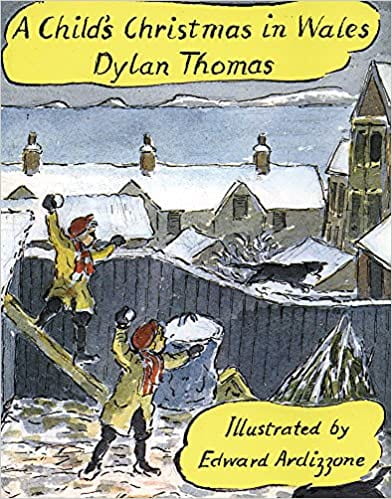
The Dark is Rising AND A Child’s Christmas in Wales

Quote

The Dark is Rising by Susan Cooper and A Child’s Christmas in Wales by Dylan Thomas

Books of the Week: 13 December 2020

Illustration by Joe McLaren

Illustration by Edward Ardizzone

In a wintry Buckinghamshire village, Will Stanton is waiting impatiently for his birthday the next day. Christmas is not far off and he is hoping for a crisp covering of snow. When he and his brother visit a nearby farm to fetch hay for their rabbits, they notice a throng of unusually noisy rooks that appear to be as spooked as the boys’ pet rabbits were when they fed them earlier. In addition to an encounter with a strange homeless-man, these signs make Will feel uneasy and threatened. When he shares this with Mr Dawson, the farmer, he is told ‘The Walker is abroad … And this night will be bad, and tomorrow will be beyond imagining.’ If you suspect that this means we are in for a tale of the magical and fantastical, you would be right. Will discovers he is no ordinary eleven year old, but one of the the Old Ones who must bear the burden of fighting the powers of Darkness throughout history.

This is the second book in The Dark is Rising sequence and I have chosen it because it is a landmark in fantasy writing for young people, because it is set at Christmas and because it is a wonderfully atmospheric read. Susan Cooper conjures a landscape that is drenched in history and the power of myth and folk magic, with a force of darkness that controls the natural world and threatens harm to ordinary people. Will may have his powers, but he feels isolated from his family and everyday life by his newfound knowledge. The whole story keeps us in a state of persistent dread. Although the first book in the sequence is Over Sea, Under Stone, it won’t spoil the experience if you read The Dark is Rising first and then go back to that one. The others are Greenwich, The Grey King and Silver on the Tree. In some of these the action moves to Wales, the setting of my next choice.

A Child’s Christmas in Wales is more a very short story than a book, but reminds me of growing up in Wales. I’ve chosen it for the humour and rich language. Who could resist rolling descriptions such as this:

Years and years and years ago, when I was a boy, when there were wolves in Wales, and birds the colour of red-flannel petticoats whisked past the harp-shaped hills, when we sang and wallowed all night and day in caves that smelt like Sunday afternoons in damp front farmhouse parlours and we chased, with the jawbones of deacons, the English and the bears, before the motor-car, before the wheel, before the duchess-faced horse, when we rode the daft and happy hills barebacked, it snowed and it snowed.

These are my final book choices as the Librarian of King Edward VI School because I will be retiring at Christmas after thirteen years in the job. It has been a privilege and pleasure to share books and reading with so many wonderful students and colleagues over the years. This blog will still be here to search for recommendations, but will of course no longer have an association with the School and the pictures and logo will all have changed by the end of this week.

Burn (Book of the Week: Lockdown edition)

Burn by Patrick Ness
Book of the Week: 21 June 2020

Illustration by Alejandro Calucci

I was thrilled that last week’s Book of the Week, Lark, won the Carnegie Medal. The winner of the Kate Greenaway Medal for illustration was won by Shaun Tan for his Tales From the Inner City.

This week’s book takes us far away from the everyday surroundings of Lark to an alternative version of 1950’s America. Sarah and her father are struggling to make a profit from their farm, so they decide to hire the labour of a rare, blue Russian dragon to clear the land. Just as in our version of the USA in 1957, Dwight D. Eisenhower is president, small town racism is bubbling under the surface and sometimes erupting into violence, the Soviet Union is planning its launch of Sputnik and the Cold War is ongoing: these are all present in Burn, but with added dragons.

Dragons have an uneasy relationship with humans; they have their own culture and mythology and there are people who distrust and fear them and people who have formed cults about them: they can also talk. Despite her father’s warning about the dragon, Sarah is curious and learns that Kazimir (the dragon) is there because of a prophecy that actually involves her. If all this sounds a little ‘fairytale’, the introduction of a ruthless teenage assassin, and two FBI agents who are on his trail, dispel that completely, in fact there are some realistically violent action scenes.

Later on in the book there are some surprising set pieces that seem ideal for an action movie. As you would expect from Patrick Ness, the human element and the romantic relationships are never ignored, providing plenty of heart in an action adventure set in a finely imagined world.

Generally suitable for older readers in Year 9 and upwards.

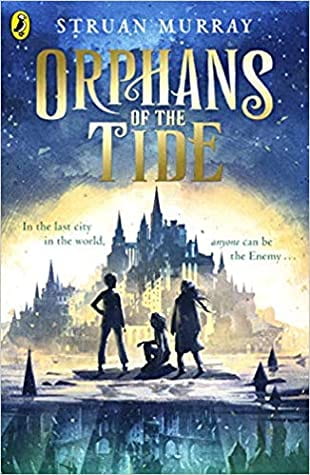
Orphans of the Tide (Book of the Week: Lockdown edition)

Orphans of the Tide by Struan Murray

Book of the Week: 31 May 2020

Illustration by Manuel Šumberac

This week we find ourselves in The City, the only city left in a drowned world full of fearful inhabitants. An evil Enemy haunts their streets and their imaginations, regularly taking over the body of some poor chosen human who is then dubbed The Vessel and who must be put to death. We learn its methods from excerpts from The Diary of Claude Hestermeyer which are interspersed throughout the story. Claude was a Vessel from the past who wanted to hand on advice before he was killed.

Ellie is a young, orphaned inventor in the city, who survives by mending machinery that was mostly created by her mother. She is helped by the wayward Anna, her best friend with whom she continually bickers. When a whale is washed up on one of the city’s rooftops, and a bewildered young man is cut out of its belly and declared the new Vessel, Ellie sets out to save him from being condemned to death by the City’s Inquisitors who are the ruling class of their society. She is offered help by a boy called Finn who is desperately seeking her approval and who she doesn’t seem to like. The odds are heavily stacked against Ellie and Anna – are they just being stubborn and foolhardy in their desire to help a stranger?

The author has created an exciting adventure in a wonderfully well-developed world. Images of the sea and all its creatures are seamlessly woven into the story. The relationship between some of the characters reminded me of that between Harry Potter and Tom Riddle and there was also echoes of Mortal Engines by Philip Reeve in the imaginative setting and inventive characters.

Other books that feature flooded worlds include:

Flood Child by Emily Diamand

Not the End of the World by Geraldine McCaughrean

Floodland by Marcus Sedgwick

Flood World by Tom Huddleston

Book of the Week (Lockdown edition)

Charmed Life by Diana Wynne Jones

Book of the Week: 2 May 2020

My 1979 copy with cover illustration by Graham Humphries

In a world where magic is common, but not everyone is a witch or warlock, there is a government department responsible for magic.  An orphan boy and his sister find themselves living in a castle, where everyone has the power of magic, under the tutelage of a powerful enchanter. No, this is not Harry Potter; it is the first published book in the Chrestomanci series written by Diana Wynne Jones in the 1970s. (The published order is not the same as the chronological order as the author later wrote prequels).

Eric Chant (also known as Cat) and his sister Gwendolen have been looked after by their neighbour, Mrs Sharp, after the death of their parents in a tragic paddle steamer incident. Gwendolen, a talented witch, wants more out of life than mixing with the second-rate fortune-tellers, warlocks and certified witches in the neighbourhood. Cat is quite happy where he is. He has no magical skills and is fond of Mrs Sharp. One day, when he comes home from scrumping apples, he finds a tall, smartly-dressed stranger in the kitchen. Gwendolyn has written to Chrestomanci, who knew their parents and to whom they had a family connection. As a result, Cat and Gwendolen are to go and live with him in Chrestomanci Castle as part of his family. Cat is dismayed but Gwendolyn is triumphant. Her triumph is short-lived when she learns they are not to be taught witchcraft for some time. She makes life horrible by using her magic to play pranks on all the castle’s inhabitants. These get more elaborate the more Chrestomanci either ignores them, or puts them to rights the next day. How far will she go and will Cat do anything to stop her?

Diana Wynne Jones had a gift for creating inventive magic with everyday, practical detail that makes it seem wholly believable. Her writing was also funny.  The pert, bossy and manipulative Gwendolen is a colourful character and it is refreshing, in a magical fantasy, that the forces of destruction are not all-powerful enchanters but people with petty failings.

If the idea of starting this series is appealing, here is a guide that will help with reading order.

An item that is integral to the plot. To find out how, read the book
Available at: https://collection.sciencemuseumgroup.org.uk/objects/co528003/bryant-mays-book-matches-over-100-years-of-goo-book-matches

First edition cover from 1977 illustrated by Ionicus

Elidor

Elidor by Alan Garner

Book of the Week: 15 March 2020

Cover illustration by David Wyatt

This week’s book is a classic from the 1960s. This is partly because I have been busily reading Hilary Mantel’s 883-page The Mirror and the Light and have not had time to read anything else, but also because everyone should sample one of the most lauded writers for young people.

Here is the plot description from publisher Harper Collins website, where you can read a sample of the book:

Roland, Helen, Nicholas and David, four Manchester children, are led into Elidor, a twilight world almost destroyed by fear and darkness.

On a gloomy day in Manchester, Roland, Helen, Nicholas and David are lured into a ruined church, where the fabric of time and place is weak enough to allow them into the twilight world of Elidor. It is a place almost destroyed by fear and darkness, and the children are charged with guarding its Treasures while a way is sought to save the dying land.

Then the evil forces find a path through to this world…

If you enjoy this, there is The Weirdstone of Brisingamen and its sequel The Moon of Gomrath to try, before moving on to the complex and difficult The Owl Service or Red Shift.

Alan Garner was poorly as a child and says that ‘for the first ten years of my life … I did very little but lie in bed’. He recovered and went on to be a renowned athlete at his grammar school in Manchester. After reading Lord of the Flies he decided to be a writer and left Oxford University to return home to Cheshire and write his first book. Over the years he has won many awards for his writing.

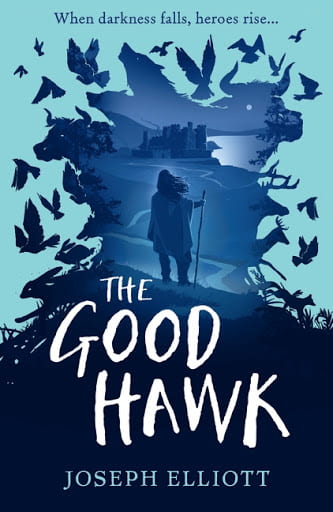
The Good Hawk

The Good Hawk by Joseph Elliott

Book of the Week: 1 March 2020

Cover illustration by Levente Szabo

Agatha is a good hawk, or so she has always believed. Her job is to patrol the sea wall and spot any approaching enemies that might attack her clan on the Isle of Skye. One day, she mistakes one of Clann-a-Tuath’s returning ships for an enemy one and fires a flaming arrow at it. Jamie is on board that boat suffering from seasickness. He has been given the role of an Angler, but is afraid of the sea. His anxiety isn’t helped when the flaming arrow sets fire to the boat and everyone must swim for their lives.

From this unpromising start, Jamie and Agatha are thrust together when a dreadful event destroys their quiet existence on Skye and they have to travel across Scotland to Norway on a dangerous mission to rescue those they love.

This is the first book in a new fantasy series called ‘Shadow Skye’ which features unique characters that will have the reader rooting for them and looking forward to book two. It’s one to try if you enjoyed The Shattered Sea series by Joe Abercrombie.

Estranged

Estranged by Ethan M. Aldridge

Book of the Week: 3 November 2019

A nameless, human boy is treated like a pet in the faerie realm. The king and queen see him as a status symbol, but leave his upbringing to a nanny. His only friend is a golem called Whick, who accompanies him everywhere and who he sometimes finds annoyingly ever-present. When the aggrieved and malicious Hawthorne turns the royal couple into rats and steals the crown, the boy sets out to search for the changeling child who replaced him in his human family. Meanwhile, Edmund (the changeling) is not only being a truculent teenager, but is struggling to control his magic powers and keep them hidden from his adopted family.

There is plenty of magic, inventiveness and action in this beautifully illustrated graphic novel, as well as human element about finding your true place within your family.

The author talks here about writing and illustrating his story. If you are captivated by this magical world, you will be glad to know that there is a sequel called The Changeling King that is on order.