The Blue Book of Nebo and The Blackthorn Branch

The Blue Book of Nebo by Manon Steffan Ros and The Blackthorn Branch by Elen Caldecott

Books of the Week: 26 February 2003

Cover design by Becca Moor

Cover illustration by Rachael Dean

It has been a long time since I’ve picked a book of the week, so I decided to read two books from the recently-announced longlist for the Yoto Carnegies. To remind me of my homeland, I chose two stories set in Wales, both of which highlight the importance of stories and reading and the power of the natural world.

The Blackthorn Branch is a middle-grade fantasy and The Blue Book of Nebo is a post-apocalyptic novel aimed at older readers.

The Blue Book of Nebo

Fourteen-year-old Dylan, his baby sister Mona and his mum Rowenna live near the village of Nebo in ‘the middle of nowhere’. From their house they can see the towers of Caernarfon Castle, the sea and the island of Anglesey. One day, when Dylan is six, Rowenna hears a radio announcement at work saying that bombs have been dropped on big American cities. She drives to the nearest large town, where she loads up a hired transit van with supplies and returns home. A couple of days later, the power goes off and the frightening chain of events that Dylan and Rowenna call ‘The End’ changes the world forever. The two decide they will write their experiences in a blue notebook that they scavenge from the local village. Rowenna will write about ‘olden days’ and Dylan about what their lives look like now. They promise not to read one another’s entries.

This ‘blue book’ makes for a brief, powerful and bleak read, but never a hopeless one. Despite the harsh conditions, Dylan and Rowenna find much more of a connection with the natural world. Dylan discovers a gift for growing food and a sensitivity to nature. Rowenna sees human emotions in the environment where a ‘potato field is kind on a warm spring day’ or the house develops a hole in the roof because it is ‘fed up’. They gain strength from books and reading, especially from exploring Welsh literature. Dylan notices that the books he used to read, that took cars and computers and phones for granted, don’t make as much sense as they used to and he turns to reading much older stories, including those in the Bible. This is a thoughtful and reflective read with themes that resonate long after the book has been put down.

A couple of good companion reads to The Blue Book of Nebo would be Z for Zachariah or Island of the Blue Dolphins.

The Blackthorn Branch

In the small village of Penyfro in North Wales, Cassie and her cousin Siân are trying to cast a spell using ‘a mush of leaves and rabbit poo and bottle tops’ stirred in a plastic bucket. Siân is confident it will work, but Cassie isn’t convinced that any spell will be able to transform her grumpy, teenage brother Byron back into someone who was fun to be with, rather than a giant sulker who doesn’t seem to care about her, or their Mam and Dad, any more.

One Saturday, when Byron has stormed off in yet another huff, the two girls follow him up the hill outside the village to the old railway line; a quiet, overgrown place since the decline of local industry. They spy on Byron from behind some bushes as he and three other teenage boys dance around a fire in front of a rusting car wreck. Cassie and Siân don’t recognise the boys and, when a flash of blue light erupts from the tunnel, they are so unnerved that they run back home.

The following morning they learn that Byron didn’t come home that night. When he fails to turn up as the day wears on everyone becomes anxious and afraid and a search is mounted. Cassie and Siân feel that the searchers are looking in the wrong locations. They know there is only one place they must venture in order to find him: the dark and dripping tunnel with its weird blue light where he disappeared.

This fast-moving read is an engaging mix of the magical and the everyday. The fantasy is rooted in Welsh myths and legends involving the type of fairy folk (tylwyth teg) who are given to deception, trickery and malice. In contrast, Cassie and Siân, their parents, their Nain (Welsh for ‘grandmother’) and the community of Penyfro are portrayed with warmth and understanding. Woven throughout are lyrical descriptions of the natural world and some messages about the value of stories and reading and the importance of nature. It all adds up to a charming and satisfying read.

The Blackthorn Branch is suitable for readers in Year groups 3-7, but can be enjoyed by anyone. If you are older than this, and like stories based on mythology and faerie, try the much more frightening ‘The Call’ by Peadar O’Guilin or ‘The Cruel Prince’ by Holly Black.
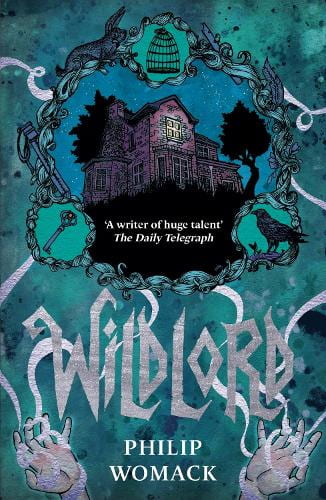
Wildlord

Wildlord by Philip Womack

Book of the Week: 2 January 2022

Cover by Karen Vaughan

Tom is not looking forward to spending a lonely summer holiday at his private school. His distant guardian is busy in Hong Kong and he will be one of only a few pupils drifting around the buildings and grounds of Downshire College. As he is reflecting on the upcoming eight weeks, following a raucous evening celebrating the end of Year 12,  a strange boy hands him a letter from an uncle he didn’t know he had, inviting him to spend the summer at Mundham Farm in Suffolk. After being refused permission to leave school by his tutor, he is walking in the grounds one evening when a tall, thin man with a tattooed face tells him to stay where he is and ‘not wake the past’. The man delivers a slash to Tom’s arm with a blade and disappears. Perversely, this makes Tom determined to discover what is going on, so he skips school and catches the train to Suffolk where he is met at the station by a silent, silver-eyed boy who transports him to Mundham Farm in a horse and cart.

At first, Tom is enthralled by the ancient farmhouse enclosed within a moat and is welcomed warmly by his charismatic Uncle Jack and the thin, pale Zita who speaks like a ‘bright young thing’ from the 1920s. Gradually, however, he realises that all is not what it seems and that an atmosphere of unease and distrust prevails. Why does his uncle tell him to watch Zita and the silver-eyed Kit? Who are ‘The Folk’ who must be kept out at all cost? Why is he assailed by incapacitating pain when he tries to catch a bus to a nearby town?

Philip Womack knows how to create a deeply magical story with an undercurrent of dread. The vividly evoked Mundham farmhouse reminded me of Thackers in Alison Uttley’s A Traveller in Time and the ancient magic would have not been out of place in Susan Cooper’s The Dark is Rising. As in The Call by Peadar O’Guilin, this is a faerie world of menace and danger rather than of cosy wonder.

Book of the Week (Lockdown edition)

Charmed Life by Diana Wynne Jones

Book of the Week: 2 May 2020

My 1979 copy with cover illustration by Graham Humphries

In a world where magic is common, but not everyone is a witch or warlock, there is a government department responsible for magic.  An orphan boy and his sister find themselves living in a castle, where everyone has the power of magic, under the tutelage of a powerful enchanter. No, this is not Harry Potter; it is the first published book in the Chrestomanci series written by Diana Wynne Jones in the 1970s. (The published order is not the same as the chronological order as the author later wrote prequels).

Eric Chant (also known as Cat) and his sister Gwendolen have been looked after by their neighbour, Mrs Sharp, after the death of their parents in a tragic paddle steamer incident. Gwendolen, a talented witch, wants more out of life than mixing with the second-rate fortune-tellers, warlocks and certified witches in the neighbourhood. Cat is quite happy where he is. He has no magical skills and is fond of Mrs Sharp. One day, when he comes home from scrumping apples, he finds a tall, smartly-dressed stranger in the kitchen. Gwendolyn has written to Chrestomanci, who knew their parents and to whom they had a family connection. As a result, Cat and Gwendolen are to go and live with him in Chrestomanci Castle as part of his family. Cat is dismayed but Gwendolyn is triumphant. Her triumph is short-lived when she learns they are not to be taught witchcraft for some time. She makes life horrible by using her magic to play pranks on all the castle’s inhabitants. These get more elaborate the more Chrestomanci either ignores them, or puts them to rights the next day. How far will she go and will Cat do anything to stop her?

Diana Wynne Jones had a gift for creating inventive magic with everyday, practical detail that makes it seem wholly believable. Her writing was also funny.  The pert, bossy and manipulative Gwendolen is a colourful character and it is refreshing, in a magical fantasy, that the forces of destruction are not all-powerful enchanters but people with petty failings.

If the idea of starting this series is appealing, here is a guide that will help with reading order.

An item that is integral to the plot. To find out how, read the book
Available at: https://collection.sciencemuseumgroup.org.uk/objects/co528003/bryant-mays-book-matches-over-100-years-of-goo-book-matches

First edition cover from 1977 illustrated by Ionicus

The Ogre Downstairs

The Ogre Downstairs by Diana Wynne Jones

Book of the Week: 24 February 2019

Cover illustration by David Wyatt. If you read the book you will understand the significance of the objects in the picture.

The story of two families trying to make themselves one, with unwilling participants and the added complication of two unusual chemistry sets.

Sally has remarried and set up home with Jack, or the Ogre as her children Johnny, Caspar and Ginny like to call him. They find the Ogre to be ill-tempered, hyper-critical and the possessor of two dislikable sons: Douglas and Malcolm. When the Ogre buys a chemistry set each for Johnny and Malcolm it leads to even more chaos as they discover the magical properties of some of the chemicals. The children try to keep the magic a secret from one another and their parents, but when objects come to life and they find out they can fly, it gets more difficult to keep a lid on the strange happenings and on their arguments.

The magic in the story is not only wonderfully inventive, but always has the bonus of being made more interesting by practical considerations. Although events are seen from the young people’s point of view, the reader also understands the adult characters and their predicament as the story unfolds.

The book was was first published in 1973 and does contain some corporal punishment of the boys that may jar with a modern readers. That aside, it is still a book very much worth reading.

Knights of the Borrowed Dark

Knights of the Borrowed Dark by Dave Rudden

Book of the Week: 7 May 2017

We get an idea of what kind of place Crosscaper Orphanage is straightaway as its Director, Mr Ackerby, stares out of his office window at children standing in line to get in the library. He despairs. His own bookcases are full of untouched, leather-bound works, whereas the children are queuing for books that are full of magic and imagination and which have been read to pieces.

Denizen Hardwick is one of these book-loving orphans who is amazed to discover, as the story opens, that he has an aunt who wants her to come and live with him. The only downside, in Denizen’s view, is that he will miss his best friend Simon, who has shared his dormitory for the last ten years. At least, this is what Denizen believes is the only disadvantage. But when the charismatic Graham McCarron arrives to take him to his aunt’s house and they encounter a fearsome and fantastical creature on the way, he realizes his life is about to change in all kinds of dangerous ways.

This is a magical debut novel from Dave Rudden which has been compared to books by J.K. Rowling, Rick Riordan, Derek Landy and Eoin Colfer. The sequel, The Forever Court, is also available to borrow from the School Library.